
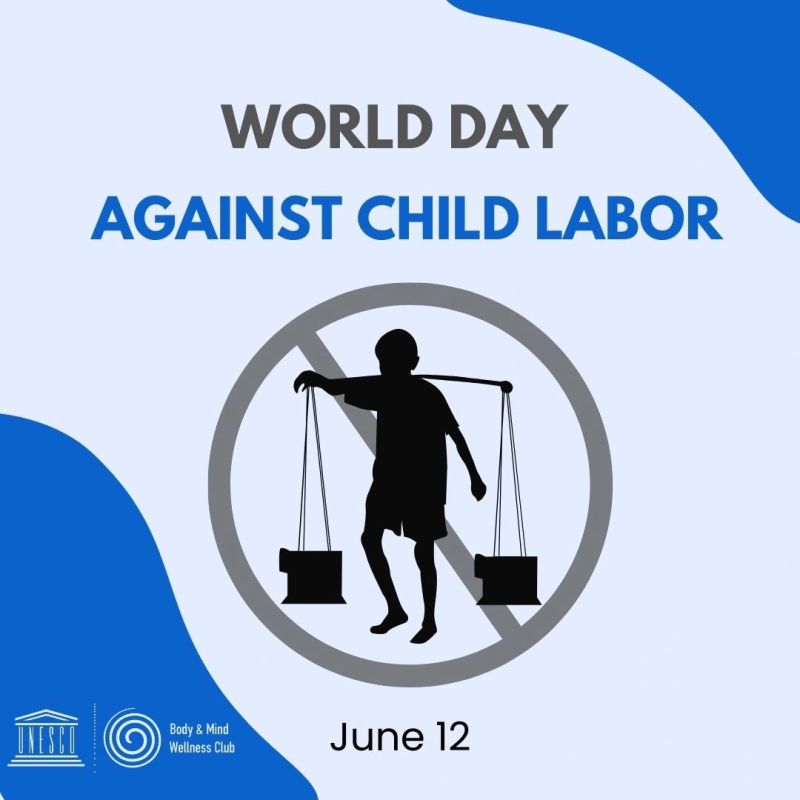
Understanding and Ending Child Labour in South Asia & Africa
Walk through any vibrant street market, auto workshop, or tea stall in South Asia—whether in Pakistan, India, Bangladesh, Sri Lanka, Nepal, Bhutan, or Myanmar—African countries as well, and you will likely spot them. Small hands carrying heavy trays, grease-stained aprons on tiny shoulders, and weary eyes that should be looking at a school chalkboard instead of a factory floor.
Child labour remains one of the biggest challenges facing our region. While the gap between the rich and the poor continues to widen, millions of children are forced to swap their backpacks for heavy tools just to help their families survive.
Let’s break down this crucial issue step-by-step in simple terms: why it happens, why current solutions fall short, and how we can bring every child back to the classroom where they belong.
1. Why Does a Child Need to Work?
Children do not choose to work because they want to; they work because they have no other choice.
- Extreme Poverty: In many rural areas and city slums, a family's daily income is not enough to buy basic food or pay rent. Every extra pair of hands brings in a little money to keep the kitchen running.
- Family Debt: In many places, parents get trapped in debt with local landowners or brick kiln owners. Children are often forced to work alongside parents to pay off these endless loans.
- Loss of a Primary Earner: If a parent falls ill, suffers a disability, or passes away, the eldest child often becomes the sole breadwinner overnight.
- Cheap Labour for Bosses: Factory owners, workshop managers, and shopkeepers like hiring children because they pay them very low wages, rarely complain, and are easy to control.
2. Why Can’t Families Support Their Child’s Food and Education?
It is easy to blame parents, but the reality is much more painful.
- Survival Over Schooling: When a family has to choose between buying bread tonight or buying notebooks for tomorrow, food always wins.
- Hidden School Costs: Even when government schools claim to be "free," parents still need money for uniforms, books, pens, and transport—costs they simply cannot afford.
- Generational Trap: Many parents were child labourers themselves and never went to school. They often do not realize how much education could change their child’s future.
3. Why Isn't Society Supporting These Children?
Our communities often turn a blind eye to child labour due to deep-rooted societal habits.
- Normalizing the Problem: Society has grown so accustomed to seeing young boys fixing cars or young girls working as domestic help that people stop seeing it as a crime.
- Lack of Community Safety Nets: Unlike wealthier nations, many communities in South Asia lack local support funds or food banks to help struggling neighbors during hard times.
- Desire for Cheap Services: Customers enjoy cheap tea, low repair costs, and inexpensive handmade goods, rarely thinking about the young child who worked long hours to make them possible.
4. Why Are Government Institutions Failing to Protect Children?
Most South Asian countries have laws against child labour, yet the practice continues openly. Here is why enforcement falls short:
- Weak Law Enforcement: There are far too few labor inspectors to monitor thousands of small shops, farms, and informal workshops.
- Corruption and Bribes: Unscrupulous business owners often bribe officials to look the other way when young children are working.
- Outdated Birth Registration: Millions of children in remote villages do not have official birth certificates, making it easy for employers to lie about their actual age.
- Overcrowded and Underfunded Schools: Government schools in poor areas often lack proper classrooms, clean water, or caring teachers, causing children to drop out early.
5. Why Aren't NGOs Visible Enough in Every Area?
While non-governmental organizations (NGOs) do valuable work, they face major limitations:
- Limited Funding: Most NGOs rely on temporary grants and donations, which prevents them from building long-term programs in every village.
- Focus on Cities: NGO offices and projects are mostly concentrated in big cities, leaving vast rural areas untouched.
- Lack of Police Power: NGOs can educate and support families, but they do not have the legal authority to arrest illegal employers or shut down harmful factories.
6. What Are International Laws and the UN Doing?
The global community treats child labour as a direct violation of human rights. Key international frameworks include:
- UN Convention on the Rights of the Child (UNCRC): Article 32 explicitly states that every child has the right to be protected from economic exploitation and harmful work.
- ILO Convention No. 138 (Minimum Age): Sets the global standard that children should not enter full-time work before completing compulsory education (usually age 15).
- ILO Convention No. 182 (Worst Forms of Child Labour): Demands an immediate, complete ban on dangerous work for children under 18—such as mining, handling chemicals, slavery, or hazardous machinery.
- UN Sustainable Development Goal 8.7: A global target aimed at ending all forms of child labour worldwide.
7. How Can We Eliminate Child Labour and Rehabilitate Children?
Ending child labour requires more than just making it illegal; we must address its root causes and create real alternatives for families.
- Stipends for School Attendance: Programs like conditional cash transfers provide poor families with monthly financial support or food rations only if their children attend school regularly. This replaces the income a child would have earned at a job.
- Adult Fair Wages: When parents earn a living wage, they no longer need to rely on their children's earnings.
- Free, Quality Education and Midday Meals: Offering free lunches at school solves two problems at once: it feeds hungry children and motivates parents to send them to class.
- Skill Development for Teenagers: Older children rescued from child labour need practical vocational training (such as computer skills, electrical repair, or tailoring) so they can secure dignified jobs when they reach legal working age.
- Strict Penalties for Employers: Governments must impose heavy fines and jail terms on business owners who exploit young children.
- Community Vigilance: Every citizen can help by refusing to hire child domestic workers and reporting child exploitation to local helplines.
Final Thought
Children are meant to carry school bags, not heavy bricks. Education gives a child the tools to break the cycle of poverty, elevating not just their own life, but the future of the entire nation. By enforcing laws, supporting poor families, and opening school doors for every child, we can ensure that every young mind gets the chance to learn, play, and dream.
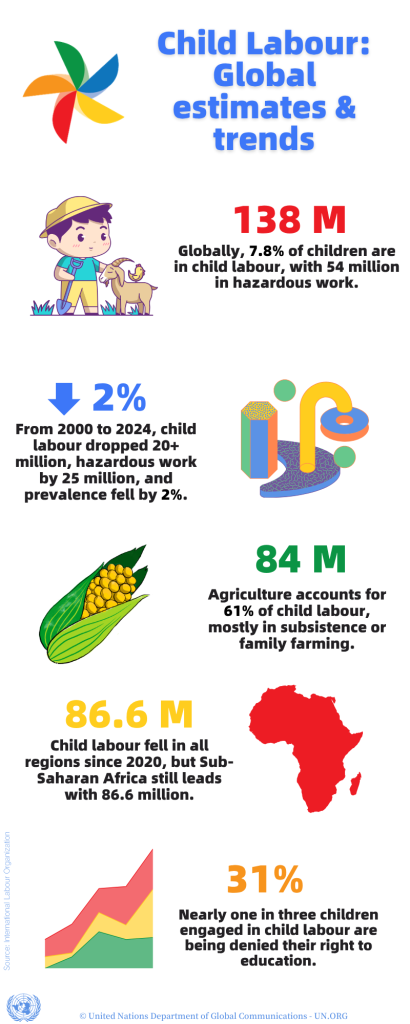
To read more on UN report:
https://www.un.org/en/observances/world-day-against-child-labour
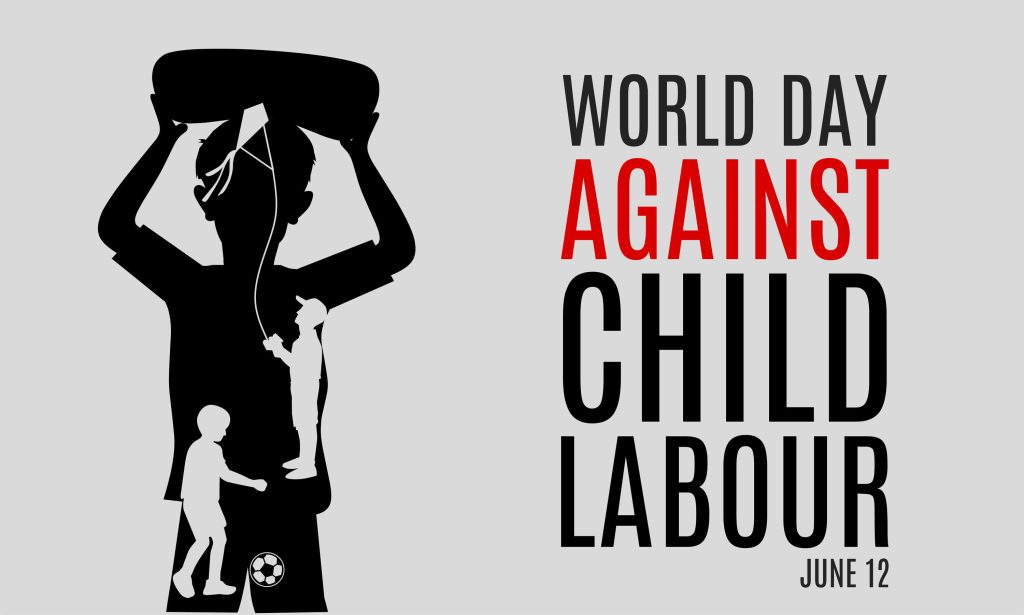
What is Child Labour?
Read the Govt artical:
https://labour.gov.gy/child-labour
Read the atrial UNICEF - Pakistan
Child Protection
Protecting all children in Pakistan from all forms of violence, neglect and exploitation
https://www.unicef.org/pakistan/child-protection-0
Report a Child Rights Violation
National Commission on the Rights of Child - Pakistan
Website: https://ncrc.gov.pk/
Download the File .pdf
Hi, this is a comment.
To get started with moderating, editing, and deleting comments, please visit the Comments screen in the dashboard.
Commenter avatars come from Gravatar.